Sunday, 15 February 2015

The Past is Alive: lost civilisations


The title to this post is a quote from Mayhem's great Pagan Fears. It's also a fact, in a way; the past is alive in each of us in a philosophical as well as literal way; and in the things people leave behind them and our reponses to those things. Which is 
essentially a long-winded way of linking things that have nothing much in common except that I got them for Christmas; but in fact looking at it more closely, there is a link of sorts, albeit a tenuous one.

Taking a few things almost at random, the link that came to mind was not only that they were all the products of human beings, but that they all represent ways of life that no longer exist, or that have changed almost beyond recognition. As a non-misanthrope (at least 94% of the time), the things people leave behind elicit an emotional response of one kind or another; an empty landscape is beautiful, but there is something special about stumbling unexpectedly upon a standing stone or war memorials, or cairn or even old initials carved in a tree, or indeed this statue, in the middle of nowhere;


 These objects represent the lives and worlds of people you will never know, times that will never return and that can probably never be fully understood in the casual way we understand our own time.

ANYWAY, this will be chronological as it seems simplest, even though Switzerland in 1983 (later) is now as gone as Mississippi in 1929. Unless that is, you subscribe to a non-linear understanding of time.

As good a place to start as any, Charley Patton's music documents not just one vanished world, but several, so:

Complete Recordings 1929-1934 by Charley Patton (5CD box set, JSP Records)


 The recordings the great Charley Patton made fall on either side of the (to us) dividing line of the Wall Street Crash of 1929 which heralded the Great Depression; but they also demonstrate that, although it no doubt had serious repercussions for the rural south, there was little the Depression could do to immediately worsen the situation of the African American population living in and around the cotton plantations and poor farms of Mississippi.


Even in his earliest recordings, Patton’s songs are full of references to local events and people (there’s a nice article here: www.earlyblues.com/essay_pea%20vine.htm) and his concerns are – as his listeners mostly would have been - local too. Many of his songs are full of enigmatic references to people, places and things, sometimes (as in Tom Rushen Blues, documenting the singer’s tempestuous relationship with Tom Rushing, then sheriff of Mergold, Mississippi) fairly easy to decipher, but sometimes impenetrable but hugely evocative.
 

The Wall Street Crash was probably news on the Dockery Farms plantation (outside of Clarksdale, Mississippi) where Patton had been raised, but it was almost certainly not as immediately pressing as had been the great Boll Weevil infestation that devastated cotton plantations across the southern states of the USA through the early years of the 20th century, commemorated in (among many other places) Patton’s Mississippi Boll Weevil Blues (recorded in June 1929) which mythologises the spread of the weevils in a rueful, semi-humorous way:
Well, I saw the bo weevil, Lord, a-circle, Lord, in the air, Lordie/The next time I seed him, Lord, he had his family there/Bo weevil left Texas, Lord, he bid me "fare ye well", Lordie/(Where you goin' now?)I'm goin' down the Mississippi, gonna give Louisiana hell


In the month of the great Wall Street Crash (which took place in late October 1929), Patton was recording a two-part song which had more immediate local and personal significance; ‘High Water Everywhere’ parts 1 & 2, commemorating the Great Mississippi Flood of 1927, which Patton – an eye-witness to the flood - gives an almost biblical apocalyptic quality:


lord, the whole round country, man, is overflowed /You know I can't stay here, I'll go where it's high, boy/I would go to the hilly country, but, they got me barred /Now, look-a here now at Leland river was risin' high/Look-a here boys around Leland tell me, river was raisin' high/Boy, it's risin' over there


 The consequences of disasters like the great flood and the weevil epidemic were inseparable from those of the Depression itself; a vast, poverty-stricken population for whom escape was only possible through the exactly the kinds of things Patton was singing about; alcohol (still illegal in this period, hence the sheriffs like Rushing who pop up throughout Patton’s work) or becoming part of the large itinerant population then wandering the country looking for work.


Despite his much-documented loathing for work, Patton identified closely with these roaming figures and his most evocative (and to modern ears almost sepia-toned) songs such as Jim Lee Blues pt 1 (also recorded the same month as the Crash) and Some Summer Day (from his first post-Crash recording session in June 1930) have lyrics which reflect the instability of a life on the road and are sharply relevant to the events then happening (or about to happen) to thousands of displaced people across America; but they are also full of the railroads, riverboats and  mysterious individuals that had probably been a part of his work since long before they were put down on wax.
 
World War Two, the civil rights movement, advances in technology, music and just the passing of time itself have made Patton’s recorded work (and indeed the one photograph of the man himself, above) seem incredibly distant; but the recordings bring that lost world vividly back; its bitterness made bittersweet by the art which preserves it.


Far less distant chronologically, but even remote in other ways is the way of life and death preserved in Soviet Ghosts by Rebecca Litchfield

(I don’t want to steal her images without permission, but there is a great selection of them here: www.rebeccalitchfield.com/sovietghosts)

Soviet Ghosts is a collection of photographs by Rebecca Litchfield of the decaying remains of neglected buildings and monuments of the Soviet empire that accumulated across Eastern Europe and Russia for a large part of the twentieth century.

The photographer travelled through fourteen countries, including Bulgaria, the Czech Republic, Estonia and Russia itself, capturing powerful images of the schools, youth camps, hospitals, sports centres, conference halls and prisons that were once central to the daily lives of thousands of people but are now rotting, empty and often open to the elements.

As the title suggests, there’s something extremely haunting about these images; the remains of heroic, ideological murals give the same impression as the more familiar and older tumuli, standing stones, cairns and war memorials that are found across the world, but there is often an added sense of poignancy here because it so often feels like the people who used these places have just left; the youth camps are strewn with books, posters, banners, sports equipment or even shoes. In hospitals, laboratories or theatres equipment has been left as it was, seats are stacked neatly or scattered across rooms as if in the aftermath of a hurricane. In the case of the abandoned Ukrainian city of Pripyat, lying within the danger zone surrounding Chernobyl power station, all of this is even more intense; homes were abandoned hurriedly, with all but the bare minimum of belongings being left behind. And for the most part nobody, even thieves, has returned. TV sets sit in front of mouldy couches, toys lie abandoned in living rooms. As with the state buildings in Russia, schools in Bulgaria, military bases in Latvia and monuments all over the former Soviet Union, the feel is partly haunting because unlike Stonehenge or the pyramids, nothing is really very old; children were being schooled in the Young Pioneer Camps when I was born; the Chernobyl disaster happened in 1986. Bizarre.

picture © Rebecca Litchfield

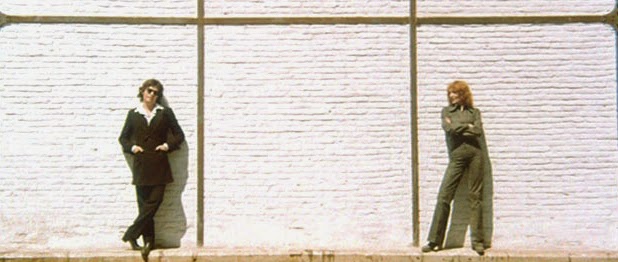
In the same period that millions of people were living the lives prescribed for them by the government of the USSR, the late Robert Fuest was attempting, with mixed results, to film Michael Moorcock’s stylised, very 1960s sci-fi (ish) novel The Final Programme, resulting in The Final Programme (dir Robert Fuest, 1973)


Although Fuest’s film was released in the early 70s, it’s infused with the spirit of the mid 60s pop art/swinging London scene that was the background to Moorcock’s novel. Although the film is confused and not exactly focussed or dynamic, it has a charismatic central performance by the sadly underrated Jon Finch as dandified millionaire genius scientist playboy Jerry Cornelius, who casually buys tanks, missiles and napalm for undisclosed purposes and generally fails to get excited by anything.
 
Finch exudes a kind of blasé charm best captured in the immortal exchange when a minor character discovers that Cornelius’ refrigerator is full of chocolate biscuits:

man: you like chocolate biscuits then?
Jerry: (with feeling, for once) ‘oh yeah’
 
Not a masterpiece, but stylish, humorous, apocalyptic, philosophical, semi-psychedelic, camp sci-fi action movies don’t come along very often, so it has a certain rarity value as well as a great period atmosphere.
 

Of a similar vintage are the amazing records that make up Saigon Rock & Soul (Sublime Frequencies Records 2012) 
 
This 17 songs on this compilation were recorded between 1968 and 1974; that is, while the Vietnam War was taking place. The assimilation of western pop music in Vietnam followed much the same pattern as in Japan and elsewhere in Asia; in the early 60s the sound of the electric guitar in the twangy form of The Ventures and The Shadows had captured the youth of the country, to be superceded thereafter by the influence of the Beatles, Rolling Stones, soul music etc.

During the war, the occupation of troops from the US meant that local musicians were more than ever influenced by western music and the songs here include funk, soul and heavy acid rock. The musicians favoured (or at least ended up with, due to limited recording facilities) heavily fuzzed guitars (sometimes with excellent watery wah-wah effects), funky bass and reverb-laden vocals.
 

The songs are very much products of their time, and were made with little thought of posterity, but what sets them apart from superficially similar-sounding records from elsewhere are the very specific-to-their-time-and-place subjects; Carol Kim’s James Brown influenced  Cái Trâm Em Cài (Your Hair Clip), about a hairclip made from shrapnel by her soldier boyfriend in the trenches, Lệ Thu singing about lovers separated by war, and the almost folk-ballad like treatments subjects like jealousy, which invariably feature young soldiers their protagonists and patriotism as a (sometimes negative) theme.

It’s amazing that such seemingly ephemeral music should not only have survived the extreme situation that gave rise to it, but that it should be so good; moments like the saxophone solo being played over the squelching, gritty wah guitar on Phương Tâm’s Đêm Huyền Diệu (Magical Night) or the sinister, almost Goblin-like intro to Lệ Thu’s Starfish have a unique atmosphere and feel.

Less alien (to me) in its milieu but barely less of a vanished way of life is documented in the superb Only Death is Real by Thomas Gabriel Fischer and Martin Eric Ain.

Although the story of Fischer’s chaotic and deprived childhood more than adequately explains the intense morbidity of his vision and the anguished quality of the music he produced as the songwriter and driving force behind Hellhammer, it’s the less personal aspect that earns the book its place here.
 
Forming a metal band (or any kind of band) in rural Switzerland (or rural anywhere) in the early 80s was a vastly different undertaking from doing the same thing in the internet age, and there’s something moving about the long-haired teenagers trying to forge their own identity amidst the mundane streets of Switzerland, their hand-made banners and hand-drawn logos. It may seem a stretch, but Hellhammer’s Triumph of Death; a feral cry of desolation and anguish, calling from the middle of nowhere to anyone who would listen, with its trappings; black & white photos of alienated youths posing with the makeup, spikes, studs and bullet belts isn’t really so different from Pony Blues, recorded in 1929, the discontented bellowing of a man with little to lose and not much to his name except for the guitar he poses with, in the only known image he has left behind him.


Sunday, 8 February 2015

Albums that sound like they were recorded in the dark...

Now this is just pure, subjective, tenuous silliness, but I'll probably add more as they occur to me. (Ancient VVisdom!)...

The Cure Seventeen Seconds (Fiction, 1980)

Seventeen Seconds was a huge departure from the (relatively) straightforward catchy post-punk songs of their debut and for some (me) remains possibly their greatest work. The album is full of strange, enigmatic songs and fragmentary bits of atmospheric music and even in its more rock moments (Play for Today, A Forest) has an almost muffled, hushed quality. Partly this is due to the production and Mathieu Hartley's oddly dusty sounding synths and Simon Gallup's deadened bass sound, but also Robert Smith's gloomy vocals and shadowy, allusive and dreamlike lyrics. Plus it has a song on it actually called At Night.
Best example(s): Secrets, In Your House

Yurei Night Vision (Adversum, 2012)

Like Seventeen Seconds Night Vision has explicitly nocturnal themes, but even so, the way the Norwegian multi-instrumentalist imbues his slightly dissonant spindly art-rock/jazz/prog/metal songs with the atmosphere of  darkness, not in the 'darkness and evil' sense, but the '3 in the morning depths of night' sense is impressive and strangely addictive.
Best example(s): 3am Revolt, Dali by Night

Tom Waits - Franks Wild Years (Island, 1987)

To be fair, several of Waits' albums (of all periods) would fit in this list, but Franks Wild Years ("Un Operachi Romantico in Two Acts"), the music for a stage play by Waits and his wife Kathleen Brennan, is particularly opaque and peculiar, its odd, archaic textures enhanced by the use of instruments like the pump organ, optigan, marimbas etc etc and production techniques that give parts of the album the scratchy sound of old Victorian cylinder recordings. Not his greatest work, but it some great songs and an immersively dark (in all senses) atmosphere.
Best example(s): Blow Wind Blow, Cold Cold Ground


The Smiths - The Queen Is Dead (Rough Trade, 1984)

Some parts of this album don't quite belong here; the wistfully late afternoon sun of Cemetry Gates and the sourly light hearted Frankly, Mr Shankley; but at least a few of the songs are strikingly nocturnal-sounding (to me anyway); from the buried-in-time intro of Cicely Courtneidge, the darkened city streets of Never Had No One Ever and the cell/grave-like bedroom of I Know It's Over to the self-dramatizing There Is a Light that Never Goes Out and the rueful acceptance of the closing Some Girls Are Bigger Than Others, with its warm, fuzzy, sleepy coda. The Queen is Dead is acknowledged (NOT by me) as The Smiths's greatest achievement, and part of the reason is surely the album's wholeness; its hermetically sealed quality; the vision of Morrissey, Marr, Rourke and Joyce distilled into one (approximately) 37 minute mood piece.
Best example(s): I Know It's Over

Gorgoroth - Antichrist (Malicious Records, 1996)

Many black metal records belong in this list, but the one that to me captures that running-through-the-forest-at-midnight-in-the-rain quality more strongly than any other is Gorgoroth's 1996 opus. Every part of the album contributes to this feel, but most of all Infernus' atmosphere-filled guitar playing. If asked for a song that defines what Norwegian black metal in the 90s was, I would probably nominate Gorgoroth from this short album. The tune, with its almost classical guitar, strangely mournful bass, desolate screeching (and solemnly chanting) vocals and atmospheric noises creates an almost tangible atmosphere of night and cold.
Best example(s): Gorgoroth


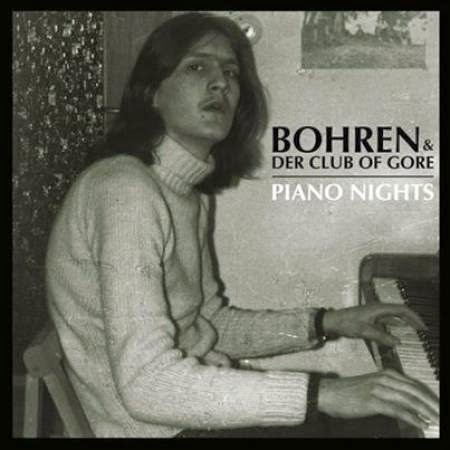
Bohren and der Club of Gore - Piano Nights (PIAS Recordings, 2013)

Creepingly slow ambient jazz probably always sounds like it was recorded at night; the title suggests this is supposed to sound that way. It is certainly vividly yawn-inducing, which is supposed to be a complimentary statement.
Best example(s): Unrasiert


The Doors - LA Woman (Elektra, 1971)

Most of The Doors' albums have an element of LA nightlife about them, but on LA Woman not only does Jim Morrison actually bellow 'City at night!' lots of times, the whole album - perhaps because of Jim Morrison's mental/physical state - is imbued with an early hours atmosphere; filled with nighttime energy on LA Woman and The Changeling, weary with exhaustion on Hyacinth House and hallucinatory on Riders on the Storm
Best example(s): The Changeling, Hyacinth House

Saturday, 7 February 2015

Mediocracy; when 'pretty good' is good

MEDIOCRACY
noun
Government or the holding of power by people selected according to their mediocrity.


In the first decade of the millennium, the black metal movement recovered from its (actually far less dire than publicised) lull in the late 1990s; heading in different directions, bands as diverse as Watain, Deathspell Omega and Blut Aus Nord (among many others) pushed the genre beyond its original boundaries.
But the leaders of a movement are never its most representative members; and throughout the period (as in the 90s, as now) many thoroughly unoriginal, non-innovative works were produced by bands and individuals who (presumably) didn't intend to do anything more than paint their faces and make dark, angry records that paid tribute to the music they liked.


Some of these albums are really good; not the kind of good that moulds a style in its image, just the kind that takes something that already exists (Scandinavian black metal in the mid-90s mould) and makes the best version of it the artist can make, leaving out anything they don't like. For some reason a lot of the best of these kinds of bands come not from the heartlands of black metal but from the Mediterranean countries, from Eastern Europe and from Russia.

Here are two unremarkable albums that are well worth digging out; both bands played straightforward, satanic black metal, wore corpsepaint and spikes and leather and both have now split (though how a solo artist like Cryfemal 'splits' I don't know), leaving behind them discographies that will presumably be lost in the mists of time.


Cryfemal - Increibles Tormentos (Bloodred Horizon Records, 2009)
Cryfemal was in fact the project of one man, the now-topically named Ebola, based in Madrid. Starting out in black metal's 'wilderness years' (1998 to be precise), Ebola recorded 6 full-length albums and countless EPs, split releases with other bands and demos. The best named of these works is Raising Deads...Buring Alives!!! (sic) but of the few of his works I've heard, Increibles Tormentos is not only the best, but the most; that is, the black metal-est, the paint-and-spikes-est of his works.
"Ebola"


Sacradis - Damnatio Memoriae (Behemoth Productions, 2008)
Sacradis were founded in Genoa in 1996 and far less prolific than Cryfemal, but even more typical. 2008's swansong  Damnatio Memoriae is an almost archetypically typical black metal album; in a good way.

Sacradis


Those albums in full...


1 - Delirio Fuenario - launches with a thick, bassy, Marduk-like assault, pretty standard stuff but for the excellent pacing and dynamics and the actual sound of the guitars and Ebola's distinctively screechy vocals.


1. Intro - almost two minutes of 'atmosphere' - rain, church bells, ominous bits of a clunky acoustic guitar (or similar); exactly right

2  Orgasmos de Molestacion -  A great title and another fast, atmospheric, song with strong riffs and an evil, swarming guitar sound

2 - Epitaph of the Martyr - a 7-plus minute, dynamic but straightforward black metal song, with guitars alternately fast and tremolo-picked and powerfully riffy, this is a very well-recorded track with a couple of good riffs and excellent, rough-toned raw vocals and even a couple of those anguished spoken-word passages to stop it from becoming too monotonous.


3 - Puadricion de Enemigos - blastbeats underpin an extremely atmospheric droning song with Ebola unaccountably making strange donkey noises towards the end

3 - Damnatio Memoriae - the title track has a simple but great atmospheric riff, almost like a cleaner Horna, but gets derailed a little by some tempo changes and heavier passages which break the hypnotic momentum; still, a great song.

4 - Horrible & Violenta Demolicion  - a lesser tune, more  like 1349 than anything else, the best part is near the beginning (and again near the end) when fast and complicated riff is pummelled to bits until it breaks down completely; but the Xasthur-like coda is great too

4 - The Celestial Legion - one of the album's more thrash-influenced songs, with an unexpectedly melodic, mid-paced section towards the end that comes off almost as a mangled, BM Megadeth.

5 - Negro Metal - this melancholy gem opens with choir-like synth and some of the most atmospheric music of the whole album before launching into a riff reminiscent of Immortal circa Battles in the North, before seamlessly morphing back into a slower, again Xasthur-like passage


5 - Supremacy of Conscience - begins with a strange, mechanistic bit of reverby bass and atmospheric noise before the blastbeats come in with a somewhat pedestrian tune with some interesting elements, including a Celtic Frost-ish bit and a riff bearing a mild resemblance to Iron Maiden's immortal Phantom of the Opera. Not a highlight but not bad either.

6 - Viaje a las Estrellas - after an intense buildup, this turns into a fast-paced song with a sonorous drizzling guitar part and hammering drums, especially during the chorus-like part

6 - Perversion and Treacheries - a sprawling song with a plethora of good, tremolo-picked riffs, unusually clear bass and many dynamic tempo changes.

7 -  El Camino - a repetitive, almost punky steamroller riff gets faster and faster as Ebola caws over it in a reverb-laden croak; not the best song, but definitely intense and a little oppressive. Great guitar sound too.

7 - Olocaustum - epic, 13+ minutes of roaring vocals, trebly bass (really) and expressive, tremolo-picked soloing, this is at times a little incoherent just because of the sheer number of different riffs the band incorporates, not to mention the strange feedback-laden outro. Boring if not in the mood, but one of the album's cornerstones

8. Alucinacion - a 20 second burst of noise, ending with another echoing rasp from Ebola rounds off  an album which may be in many ways an unremarkable, stereotypical and unambitious one, but it does what it does exceptionally well.

8 - Redemption - Voivod-ish riffing meets 1349 vocal stylings in this intense closing song. On reflection, Damnatio Memoriae is a solid, unremarkable album; but in a good way. Lacking the style of Cryfemal, the band (perhaps because it was a band and not one man) has a tendency to pummel the listener into submission when their inventiveness flags: a good approach, when one is in the mood to be pummelled; a bit tiresome when not.

Thursday, 1 January 2015

2014: The year (some of the people who made some of) the music died :(

Another year gone, lots more people with it, including...

Ronny Jordan

If you were around during the 90s 'Acid Jazz' renaissance (and didn't actively avoid hearing it) then you probably heard some of Ronny Jordan's understatedly cool, George Benson-meets-Grant Green-ish guitar playing. It was good.

Remembered by me for: the great, very Grant Green-esque 'Blues Grinder' from his 1992 debut The Antidote

Bob Casale


As a member of Devo, Bob Casale was secondary to the organism he was part of; but it wouldn't have been the same without his contribution

Remembered by me for: Q: Are We Not Men? A: We are DEVO! I love that album


Velma Smith

To this day, female guitar players tend to be overlooked, especially if their gender isn't marketed as part of their appeal. It's all the more impressive then, that Velma Smith was a session player in the very masculine world (singers apart) of the Nashville music scene back in the 50s.


Remembered by me for: I mostly avoid country music, so don't know much of her work, but she played on Skeeter Davis' 'The End of the World', by far the best version of a pretty iconic song.


Frankie Knuckles

I probably disliked far more Frankie Knuckles stuff than I liked, but a cool guy and important figure nonetheless.

Remembered by me for: 'It's a Cold World' Dated enough to be nostalgic about; I don't hate it.


Scott Asheton

As the drummer in The Stooges Scott Asheton will forever have a place in rock history. If you think the band was as primitive as its reputation suggests listen to their debut again; despite the toughness of the sound, Scott Asheton was a proper percussionist.

Remembered by me for: everything the original Stooges lineup recorded but let's say 'No Fun', where the drums and handclaps stop the song from being just a brutal anthem and make it, ironically, fun.


Billy Mundi

If Frank Zappa let you in his band you were probably pretty good; Billy Mundi played the drums on some of the Mothers of Invention's most inventive albums; he was pretty good.

 
Remembered by me for: We're Only In It For The Money. The band's insane adaptability is at its most eclectic on this (still quite hippyish) masterpiece satirising the flower power era. 


Maria Kolokouri

As Tristessa, Maria Kolokouri had been active in the Greek metal scene since the mid 90s, and was pretty much the creative force behind successful black metal band Astarte

Remembered by me for: Astarte's Doomed Dark Years. Classic Greek black metal, they did more good stuff after this, but never as good.


Bobby Womack

Bobby Womack worked with everybody, and has had lots of proper obituaries; he deserved them.

Remembered by me for: Across 110th Street. An obvious one but it is a classic


Horace Silver

A lot of his stuff is a bit swingy/easy for my taste, but Horace Silver was a jazz great, and his body of work is ridiculously big and varied.

Remembered by me for: It's Got To Be Funky more modern and Dave Brubeck-ish than a lot of his earlier work


Tommy Ramone

The last original Ramone gone; SAD.

Remembered by me for: Playing drums on the first three (possibly best three) Ramones albums


Johnny Winter


I am not a huge fan of Johnny Winter's music, but he was a great guitar player as well as a pivotal figure in the US rock scene of the 70s and an albino too!

Remembered by me for: 'Rock and Roll, Hoochie Koo; Classic 'Dazed and Confused' soundtrack type music.


Dick Wagner

Great guitar player, worked with tons of people including Alice Cooper a lot but best known to me for his stuff with Lou Reed

Remembered by me for: Lou Reed Live. Often overlooked in favour of the live Rock and Roll Animal album, this is GREAT and has the best version of 'Sad Song'  (from Berlin) on it. Dick Wagner is superb throughout


Jean Redpath


Some kinds of folk music will never be cool; Jean Redpath mainly sang that kind of folk music, but her voice was amazingly pure and expressive, best heard unaccompanied.

Remembered by me for: a haunting version of  'Skippin' Barfit Through The Heather' from 1962. Far more similar to the kind of Scandinavian folk music I like than the usual Scottish folk music which I don't like: http://youtu.be/KZqNGfni8TA


Jack Bruce

On the whole, Jack Bruce's music was not for me; but Cream made some great stuff, didn't they?

 
Remembered by me for: actually, playing on 'Strange Brew', by far my favourite Cream song, but he didn't write that, so let's say 'Sunshine of Your Love', which is definitely a classic anyway.


Ian McLagan

Ubiquitous keyboard player among bands/performers of his generation, including the Small Faces, Faces, Rod Stewart, Rolling Stones, plus later people like Billy Bragg etc etc He was on tons of good records.

Remembered by me for: for me you can't beat the first, 1966 Small Faces album, before they became silly music hall hippy nonsense.


RIP