Somehow managed to miss April, but to make up for it, the soundtrack to May was a varied one, some of which was as follows:
1. Slayer - Live Undead (from South of Heaven, 1988)
The somewhat shocking death of guitarist Jeff Hanneman made me reflect on the fact that, although Kerry King is probably the band's most iconic member, it's the King/Hanneman team that makes the guitar playing in Slayer so special; Live Undead is one of the best examples there is of the duo in action.
2. Depeche Mode - Everything Counts (from Construction Time Again, 1983)
The perfect marriage of then-avant-garde industrial sampling etc with chart-friendly pop. Dave Gahan's vocal is so 80s and robotic that he more or less gets away with singing some of Martin Gore's impossibly lame and naïve lyrics.
3. War - Why Can't We Be Friends (from Why Can't We Be Friends, 1975)
Silly reggae-fied funk singalong. Ridiculously sunny and good-natured.
4. Candy Mafia - Alzheimer (2010)
Dayglo Thai girl rap-pop which would be extraordinarily irritating if a) I didn't like it and b) the chorus didn't include the line "A-A-Alzheimer"
5. The Beach Boys - Little Girl (You're My Miss America) (from Surfin' Safari, 1962)
Early Beach Boys music has a naïve charm of its own, encapsulated in this slightly twee and sentimental classic from their debut album.
6. Bootsy Collins - Mug Push (from Ultra Wave, 1980)
Typically bouncy, Funkadelic-esque track from the generally not-bad-ish Ultra Wave.
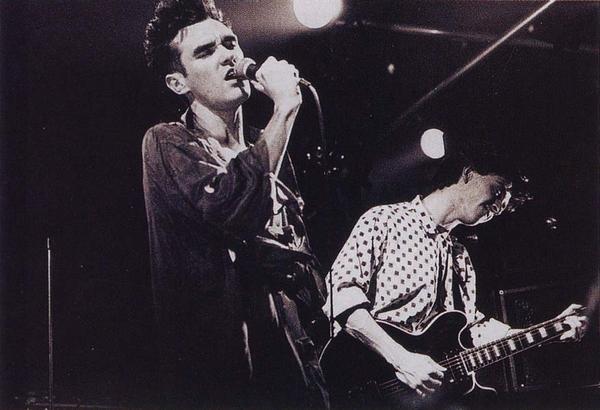
7. Morrissey - Interesting Drug (1989)
Never one of Morrissey's best songs, this sounds better than ever now, light and poppy in comparison with the average Morrissey single of the 21st century.
8. Carcass - Keep on Rotting in the Free World (from Swansong, 1996)
More vegetarians! Often overlooked because of it's accessible 'rock' qualities, Swansong is full of catchy tines and groovy riffs; Keep On Rotting is one of the best - intelligent, catchy, heavy.
9. Drudkh - Tears of Gods (from Songs of Grief & Solitude, 1996)
Beautifully minimalist, stark and hypnotic Ukrainian folk music; just acoustic guitar and some kind of rustic sounding flute/recorder, but as intensely atmospheric as it is skeletal.
10. Talking Heads - A Clean Break (from The Name of This Band is Talking Heads 1982)
The two discs of this live album showcase the early, basic punky version of Talking Heads and the arty, wold music dabbling one. Which you prefer is a matter of taste but the band rarely sounded stronger than on this characteristically yelpy early classic.
11. Sailor - A Glass of Champagne (from Trouble 1975)
The classic chart hit by German post-Roxy Music glam popsters Sailor; fun and appropriately sparkling.
12. Kiss - Black Diamond (from Kiss, 1974)
Kiss weren't always stupid; the only idiotic things on their first album are some intentionally crass lyrics. This is probably the most sophisticated song on the album and is still one of the best they ever wrote.
13. Paul Simon - Leaves That Are Green (from The Paul Simon Songbook, 1965)
This simple little tune is, like most of the acoustic performances on The Paul Simon Songbook far superior to the more polished Simon & Garfunkel version.
14. Dio - Night People (from Dream Evil, 1986)
Typical Dio; i.e. very good traditional heavy metal.
15. The Geto Boys - Damn It Feels Good to be a Gangsta (1999)
Unapologetically obnoxious gangster rap, but with a nice tune. Falls into the usual gangster trap of not wanting to seem unintelligent (fair enough; they aren't) but saying things that are pretty stupid.
16. Tom Waits - You Can Never Hold Back Spring (from Orphans 2006)
One of the many lovely, lachrymose scratchy, archaic sounding ballads from what must be one of the very few consistently great triple albums in the history of recorded music.
17. Skalmold - Kvadning (from Baldur, 2010)
One of the best Viking/pagan/black/folk metal albums of recent years, and this song is one of its catchiest tunes.
18. Plasma Pool - The Story of Flying (from I 1996)
Depeche Mode-esque electronica suits the distinctive tones of Mayhem vocalist Attila Csihar far better than one might expect, mainly because he is one of the very few black metal frontmen to actually sing as opposed to the standard rasping/shrieking of even some of the greatest BM vocalists. Catchy tune too.
18. Louis Prima & Keely Smith - Just a Gigolo/I Ain't Got Nobody (1956)
The contrast between the ebullient jazziness of Louis Prima and the chilly coolness of Keely Smith was always great and funny & although she doesn't have much to do on this record footage of them doing it on TV is priceless.
19. Whitesnake - Come An' Get It (from Come An' Get It, 1981)
Big rock tunes, big voice, innuendo-laden lyrics; Whitesnake, despite their massive success later in the 80s, made some of the great late-70s/early 80s style rock records; Come An' Get It being one of them.
20. Seth - Hymn Au Vampire (from Les Blessures de l’Ame, 1998)
Since the early 90s, French black metal has had a particular stylized, vampiric aesthetic. Seth were not innovators in the field but they did bring the French 'second wave' style to a kind of perfection.
21. Big Star - September Gurls (from Radio City, 1974)
Another kind of perfection; September Gurls is Big Star's most famous song for a reason; a perfect pop/rock song, warm, melodic and melancholy, with one of Alex Chilton's best vocal performances.
22. Dornenreich - Drang (from In Luft Geritzt, 2008)
On this album Dornenreich proved that it is possible to create all the drama and atmosphere of a full-blown black metal album using just an acoustic guitar, violin and some sibilant vocals; a great album and this, the opening track, is as good an example of their style as any.
23. The Electric Prunes - I Had Too Much To Dream (Last Night) (from The Electric Prunes, 1967)
Archetypical US psychedelic rock, the band's breakthrough single which they never bettered; didn't need to either since this has gone down as one of the classic songs of the psychedelic era.
24. Gene Clark & Doug Dillard - Why Not Your Baby (1968)
Beautiful melancholy country-tinged rock from Byrds founder Gene Clark & banjo player Doug Dillard, somehow left off the original Fantastic Expedition of Dillard & Clark album, despite clearly being the equal of any song on the record.
25. David Bowie - It's No Game no. 1 (from Scary Monsters (and Super Creeps), 1980)
Despite its reputation as one of the great Bowie albums, Scary Monsters is a little patchy and doesn't really compare with the series of albums from Hunky Dory to Low). It gets off to a great start though with this new wave-ish tune and excellent guest vocals from Michi Hirota.
26. Love - The Good Humor Man (He Sees Everything Like This) (from Forever Changes, 1967)
Most of the time this song is FAR too sweet to actually listen to, but when in the mood it's lovely.
27. Tom Waits - Warm Beer and Cold Women (from Nighthawks at the Diner, 1975)
Tom Waits again, this time is his marginally less gravelly boozy/bohemian period. Lovely, melancholy and comforting (if you like it).
28. The Shaggs - Philosophy of the World (from Philosophy of the World, 1969)
Legendarily inept 60s pop that somehow works despite the lack of normal pop things like melody, tempo, in-tune instruments etc. Love them though I do it's hard to see how the Wiggin's father thought they had commercial potential.
29. BJ Snowden - In Canada (from Life in the USA & Canada, 1996)
Very peculiar and endearing song about Canada where 'they never will be mean' apparently.
30. Forteresse - Ancienne Voix (from Les Hivers De Notre Epoque, 2008)
Canadians who might be mean. Quebec has a very strong post-Burzum black metal scene & this long song by Forteresse is as representative of the Quebec BM sound as any other.
31. Jex Thoth - The Places You Walk (from Blood Moon Rise, 2013)
Excellent dark occult psychedelic rock; great 60s-ish Sabbath-esque atmosphere, catchy tune, good lyrics and Jex Thoth's great voice, what more could you want?
Please check out the new & (hopefully) improved version of this article here!
Even those who mistakenly believe that music is better live than in studio recordings mostly accept that live albums are, with exceptions, mainly inferior pieces of work, often released for non-artistic or contractual reasons, and usually touched-up in the studio to the point that 'live' is an extremely approximate description.
In those rare exceptions, live albums give a vivid picture of an artist at a particular phase of their career. The bootleg recording is, naturally, an important part of this process, often (though not always) qualitatively inferior in terms of sound, packaging and so forth but just as often superior in performance and atmosphere.
The Smiths present a textbook example of the pitfalls of both official & bootleg live albums: the posthumous Rank (released '88, recorded '86 for Radio 1) is a good, very energetic concert, professionally recorded and then (slightly over) polished by Grant Showbiz, projecting Morrissey's voice forward in the mix at the expense of bass.
Good though it is, the ideal Smiths gig is arguably (I am arguing) not the big rock show with Craig Gannon adding extra width to the trebly guitar onslaught, it's the relatively smaller, earlier shows when the band was just beginning to make its presence felt outside of the indie chart; like Last of the English Roses (aka lots of other things), recorded in 1984 at the Hammersmith Palais when, as Morrissey amusingly points out, 'This Charming Man' was at number 86 in the top 100.

The four-piece Smiths is, necessarily more sparse than that heard on Rank, but the enthusiasm and freshness of the young band, the intimacy of the sound and the concentration on the band's earlier material makes this a preferable live album (which even features guest vocalist Sandie Shaw on a nice version of 'I Don't Owe You Anything'). That said, if Rank suffers from a surfeit of 'production', Last of the English Roses could do with some - the sound is clear and good, but almost bleakly bare and open, and the usual bootleg issues (occasional wobbles of speed, incorrect information on sleeve etc) make this just a tiny bit too vérité for its own good.
 Sometimes the live album - as with Rank - is part of an understandable attempt to salvage every little part of a short-lived career. In the case of Otis Redding this is literally the case, but luckily for both the record company and the public, Redding seems never to have performed at much below his unassailable best.
The Smiths and (more tragically) Otis Reddings' lifespans were alas too short for the live album as career milestone, but one band who have officially now been around for at least one live album too many is Kiss.
Their official live albums may be significantly polished post-recording (through necessity; as bootlegs - often better than the official releases - reveal, you can't fly around the stage shooting rockets & breathing fire without missing a few notes), but if one takes the proliferation of Kiss live recordings from 1974 onwards a coherent narrative emerges:
a fun, enthusiastic, tough-sounding young hard rock band trying to make an impact...
They then made it and became a monstrous, fun, polished hard pop-rock band and then became too rich and became a bland, cynical ,commercial hard rock band trying to keep up with the younger generation and then became an overly serious middle-of-the-road rock band with too much belief in their 'classic rock' status and then finally realised they were boring people and became a pantomime version of the monstrous mid-late 70s version of the band with much bigger explosions but less fun.
Sometimes the live album - as with Rank - is part of an understandable attempt to salvage every little part of a short-lived career. In the case of Otis Redding this is literally the case, but luckily for both the record company and the public, Redding seems never to have performed at much below his unassailable best.
The Smiths and (more tragically) Otis Reddings' lifespans were alas too short for the live album as career milestone, but one band who have officially now been around for at least one live album too many is Kiss.
Their official live albums may be significantly polished post-recording (through necessity; as bootlegs - often better than the official releases - reveal, you can't fly around the stage shooting rockets & breathing fire without missing a few notes), but if one takes the proliferation of Kiss live recordings from 1974 onwards a coherent narrative emerges:
a fun, enthusiastic, tough-sounding young hard rock band trying to make an impact...
They then made it and became a monstrous, fun, polished hard pop-rock band and then became too rich and became a bland, cynical ,commercial hard rock band trying to keep up with the younger generation and then became an overly serious middle-of-the-road rock band with too much belief in their 'classic rock' status and then finally realised they were boring people and became a pantomime version of the monstrous mid-late 70s version of the band with much bigger explosions but less fun.
 Like Kiss but with more integrity, Iron Maiden seem very much to subscribe to the 'live album as snapshot of career'.

 Fortunately for their true fans but unfortunately for everyone else, the band are such assured performers and so prolific on the live album front that, after the classic Live After Death often the only real progress is that there are a few songs that didn't appear on their previous live album. They are not quite in the Rolling Stones phase (new studio album as taster for upcoming tour) but they are getting there.
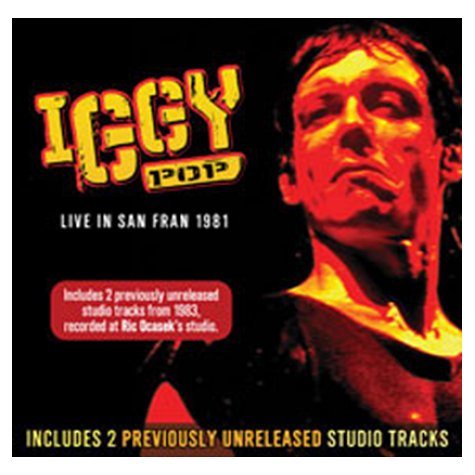
Iggy Pop has the same problem almost in reverse; again, so many albums, but of such extreme variations in quality, both performance and recording-wise that purchasing them is something of a minefield.
Daniel Johnston's fairly prolific live output, while being erratic in the extreme, document his progression from wobbly, stage-fright afflicted outsider-figure to revered, but grizzled survivor, losing a little of his unique charm (not to say his singing voice) in the process.
There is also the 'symptomatic' but not good live album; one that gives an entirely accurate picture of the artist's career at a point where that career is in difficulty. David Bowie offers two classic examples; the extremely interesting but audibly zoned-out David Live (1974) in which the artist is captured in the dreggy aftermath of glam, dipping a toe in soul/r'n'b with a good version of 'Knock on Wood' but not yet fully into the Young Americans phase.
Fortunately for their true fans but unfortunately for everyone else, the band are such assured performers and so prolific on the live album front that, after the classic Live After Death often the only real progress is that there are a few songs that didn't appear on their previous live album. They are not quite in the Rolling Stones phase (new studio album as taster for upcoming tour) but they are getting there.
Iggy Pop has the same problem almost in reverse; again, so many albums, but of such extreme variations in quality, both performance and recording-wise that purchasing them is something of a minefield.
Daniel Johnston's fairly prolific live output, while being erratic in the extreme, document his progression from wobbly, stage-fright afflicted outsider-figure to revered, but grizzled survivor, losing a little of his unique charm (not to say his singing voice) in the process.
There is also the 'symptomatic' but not good live album; one that gives an entirely accurate picture of the artist's career at a point where that career is in difficulty. David Bowie offers two classic examples; the extremely interesting but audibly zoned-out David Live (1974) in which the artist is captured in the dreggy aftermath of glam, dipping a toe in soul/r'n'b with a good version of 'Knock on Wood' but not yet fully into the Young Americans phase.
 Stage, only four years later, shows just how technically good but sterile and pointless a live album can be; Bowie sings well, his band (with the underrated Adrian Belew on guitar) are about as good as a band can be, but somehow the material from possibly his best period, 'Station to Station', 'Low' and 'Heroes' is severely lacking in the drama and darkness that made those albums (especially the first two) so vital. What's left is a strangely sterile experience, in a word FINE.
Ideally what you want is something in between all of these extremes; a few official live albums, marking significant periods, well-played but not lacking in atmosphere and some decent quality bootlegs to fill out the 'warts and all' picture. A good place to start would be with Tom Waits;
Nighthawks at the Diner (1975)
Stage, only four years later, shows just how technically good but sterile and pointless a live album can be; Bowie sings well, his band (with the underrated Adrian Belew on guitar) are about as good as a band can be, but somehow the material from possibly his best period, 'Station to Station', 'Low' and 'Heroes' is severely lacking in the drama and darkness that made those albums (especially the first two) so vital. What's left is a strangely sterile experience, in a word FINE.
Ideally what you want is something in between all of these extremes; a few official live albums, marking significant periods, well-played but not lacking in atmosphere and some decent quality bootlegs to fill out the 'warts and all' picture. A good place to start would be with Tom Waits;
Nighthawks at the Diner (1975)

 Genuinely live, albeit recorded in a studio with a small audience, Nighthawks (as the Edward Hopper-referencing title suggests) is the apogee of Waits' beatnik/bohemian/jazzy phase, showcasing Waits as witty raconteur and teller of rambling anecdotes. In fact, the album is only seemingly informal - the band is admirably tight and Waits' own performance, warm and amiable, is nevertheless slightly more focussed than on other shows recorded (in more standard venues) in the same period (Round Midnight, also excellent, features some of the same apparently rambling introductions, only less polished). The songs are an excellent bunch of melancholy, atmospheric late-night classics too, and importantly and unusually, were exclusive to this album and not from his previous releases. 'Warm Beer & Cold Women', 'Eggs and Sausage' and 'Puttnam County' are warm, boozy, descriptive (the latter being one of those Waits songs which is essentially a list of 'things') explorations of the margins of American life, influenced by Kerouac as much as by Bob Dylan.
Waits' music underwent a transformation with 1983's Swordfishtrombones, not so much abandoning his slightly romanticised, Bukowski-esque view of life as immersing himself in its characters and giving them a soundtrack as primal, sparse and sometimes archaic as the lives of which he sings. Although it seemed sonically like a major break with the past, live recordings reveal that by the end of the 70s, atmospheric, semi-narrative songs had been stretched out about as far as a traditional band arrangement could let them;
Fast Women and Slow Horses (Australia, 1979)
This superb bootleg is probably the best live recording of Waits' career to date. Like Nighthawks... it presents a good-natured, chatty Waits, this time playing loose versions of songs, mainly from Small Change, Foreign Affairs and Heartattack and Vine, with an excellent band who are skilled enough to follow Waits' flights of fancy, making snippets like Since I Fell For You (and even Silent Night) blend seamlessly with masterful versions of classic songs like 'I Wish I Was In New Orleans' and 'Red Shoes'. Star of the show though is an extended version of the not-bad Foreign Affairs song 'Burma Shave', here turned into a powerful monologue and melded with a superb version of 'Summertime' by saxophonist Herbert Hardesty. Unlike the majority of the music discussed in this post, this version of 'Burma Shave' could only exist on a live album and is vastly superior to the studio version, which sounds underdeveloped by comparison.
Big Time (1988)
Big Time was the live album that summed up what Waits had been doing since he 'went weird' around 1983. It's a snarling, grimy, scary album, theatrical rather than naturalistic as before (as highlighted by post-production fiddling with Waits vocals to make them even gruffer). It's less likeable than earlier live recordings (with some exceptions, see postscript below) but powerful, dramatic and gripping isn't a bad trade-off.
Glitter and Doom Live (2009)
Glitter and Doom redresses the balance between Tom Waits as barroom raconteur and as twisted circus performer, bringing together a disc of excellent, grimy, strangely archaic-sounding live performances (which, though perfectly recorded, makes Big Time sound like old-fashioned showbiz) and a disc of rambling anecdotes and between-song banter, far more offbeat than the wry monologues of the mid-70s, but no less entertaining.
What the live album aims not to do though, is to capture a performer on an off-night; that is the bootleg's job, and even the greats have their bad days, as documented by....
Drink At The Bar (Bremen, 1977)
Genuinely live, albeit recorded in a studio with a small audience, Nighthawks (as the Edward Hopper-referencing title suggests) is the apogee of Waits' beatnik/bohemian/jazzy phase, showcasing Waits as witty raconteur and teller of rambling anecdotes. In fact, the album is only seemingly informal - the band is admirably tight and Waits' own performance, warm and amiable, is nevertheless slightly more focussed than on other shows recorded (in more standard venues) in the same period (Round Midnight, also excellent, features some of the same apparently rambling introductions, only less polished). The songs are an excellent bunch of melancholy, atmospheric late-night classics too, and importantly and unusually, were exclusive to this album and not from his previous releases. 'Warm Beer & Cold Women', 'Eggs and Sausage' and 'Puttnam County' are warm, boozy, descriptive (the latter being one of those Waits songs which is essentially a list of 'things') explorations of the margins of American life, influenced by Kerouac as much as by Bob Dylan.
Waits' music underwent a transformation with 1983's Swordfishtrombones, not so much abandoning his slightly romanticised, Bukowski-esque view of life as immersing himself in its characters and giving them a soundtrack as primal, sparse and sometimes archaic as the lives of which he sings. Although it seemed sonically like a major break with the past, live recordings reveal that by the end of the 70s, atmospheric, semi-narrative songs had been stretched out about as far as a traditional band arrangement could let them;
Fast Women and Slow Horses (Australia, 1979)
This superb bootleg is probably the best live recording of Waits' career to date. Like Nighthawks... it presents a good-natured, chatty Waits, this time playing loose versions of songs, mainly from Small Change, Foreign Affairs and Heartattack and Vine, with an excellent band who are skilled enough to follow Waits' flights of fancy, making snippets like Since I Fell For You (and even Silent Night) blend seamlessly with masterful versions of classic songs like 'I Wish I Was In New Orleans' and 'Red Shoes'. Star of the show though is an extended version of the not-bad Foreign Affairs song 'Burma Shave', here turned into a powerful monologue and melded with a superb version of 'Summertime' by saxophonist Herbert Hardesty. Unlike the majority of the music discussed in this post, this version of 'Burma Shave' could only exist on a live album and is vastly superior to the studio version, which sounds underdeveloped by comparison.
Big Time (1988)
Big Time was the live album that summed up what Waits had been doing since he 'went weird' around 1983. It's a snarling, grimy, scary album, theatrical rather than naturalistic as before (as highlighted by post-production fiddling with Waits vocals to make them even gruffer). It's less likeable than earlier live recordings (with some exceptions, see postscript below) but powerful, dramatic and gripping isn't a bad trade-off.
Glitter and Doom Live (2009)
Glitter and Doom redresses the balance between Tom Waits as barroom raconteur and as twisted circus performer, bringing together a disc of excellent, grimy, strangely archaic-sounding live performances (which, though perfectly recorded, makes Big Time sound like old-fashioned showbiz) and a disc of rambling anecdotes and between-song banter, far more offbeat than the wry monologues of the mid-70s, but no less entertaining.
What the live album aims not to do though, is to capture a performer on an off-night; that is the bootleg's job, and even the greats have their bad days, as documented by....
Drink At The Bar (Bremen, 1977)
 In which a jetlagged, weary and irritable Waits barks his way atonally through a selection of songs from his first three albums with almost zero banter and regular statements like 'What do you want to hear? If you don't tell me what you want me to play then I'm going to play what I want to play.' Sounds as though he didn't want to play anything really; bummer.
Please check out the new & improved version of this article here!
Please check out the vastly improved version of this article here!
Please see the updated and improved version of this article here!